

November League Spotlight: Swindon Softball League
10 November 2026
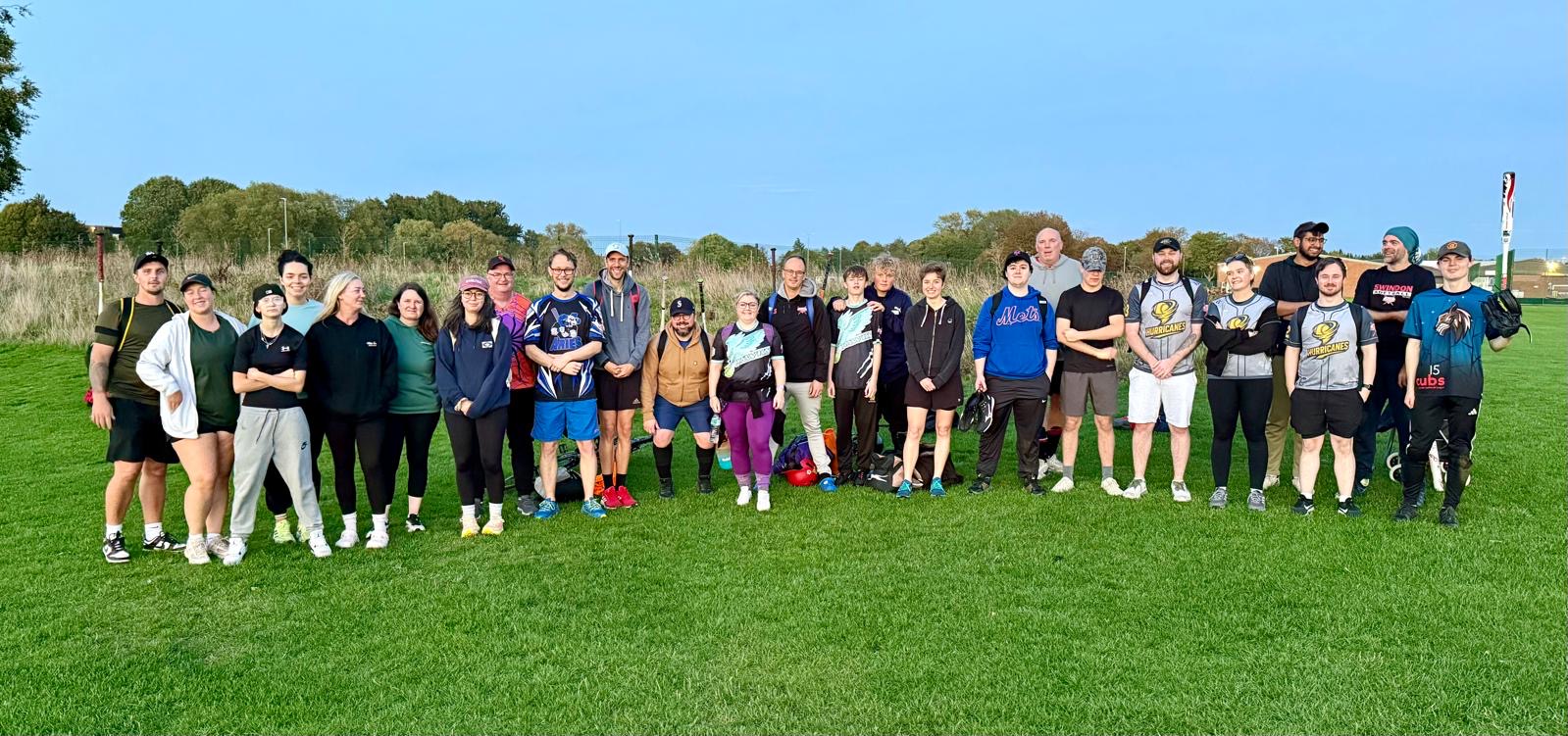
All photos courtesy of Swindon Softball
BaseballSoftballUK’s League Spotlight for November 2026 is Swindon Softball League. Our Club and Coach Officer David Turner spoke to league Chair Daniel Mounsdon and Treasurer Fiona Mounsdon about rebuilding a corporate league into a thriving community one, their three-tier approach to players, and why choice is the key to growth, player retention and satisfaction.
The league began in the early 2000s as a corporate league for Swindon's office workers. Today it runs a development division, a championship, its own tournament and a growing coaching team.
From corporate league to community league
Tell us about yourselves and the Swindon Softball League.
Daniel: The league started in the early 2000s as a corporate league. Swindon had a lot of professional businesses, and different companies around the town played each other. Many of the games were at Halcrow, where I joined as a graduate, and that's how I got into softball.
During the credit crunch a lot of those jobs left, and that source of players dried up, so the league gradually shrank. What we've been doing since is growing it back, but as a residential, community league. It's aimed at people living in Swindon, people moving to the area looking for a community, families looking for something to do, and older people getting back into sport. The market is much more varied, and we've been able to do a lot more because of it.
Fiona: Back then it was very casual. We didn't really have coaches, and we didn't know much about the wider softball world, with its tournaments and travel. That changed when coaches moved to the area and joined the league, and when some of our players went over to the more established Bristol league. They brought back proper umpiring, rules, training and coaching.
Daniel: The league is now a gateway to lots of things. That might be coaching, playing higher-grade softball, getting into baseball, organising, or just using a skill like graphic design to design the shirts. We try to open each of those gateways and make them visible.
Fiona: I regularly tell people: even if you don't want to play, you can still join the league. We need scorers, captains, people in administration and help with social media. Most of us love playing, but there's so much to be gained beyond just physical activity, and we try be very open-minded about what people can get out of it.
Tournaments
How much is travelling to tournaments part of building your teams?
Daniel: Every year we review what we call our products, everything the league offers, and ask which are healthy and which need work. Tournaments are always key. When people new to the sport go away and play a whole day or weekend, the ones who are going to get hooked get hooked. Several people on our committee spend the year encouraging players to form teams and travel. The main barrier is that only so many teams can enter tournaments.
Fiona: We have a tournament strategy that we update every year. Every tournament we take a team to should have an objective. If it's about experience, you might rotate fielding positions even if you win less. If it's about doing as well as you can, you pick the team differently.
Money is a big factor too. Tournaments can cost £350 up front, and on a bigger scale you don't always know who your players will be when you pay. We've now got a new venue and host our own tournament, so the entry fees help us cash-flow putting our own teams into other tournaments. It really solidifies friendships.
Daniel: People from Swindon going to external tournaments used to be very rare. Building that demand has been one of our biggest successes. The danger now is that we're victims of that success and create more demand than the wider softball world can meet. It's one of the most challenging things to get right each year, but it usually works out.
Fiona: You don't always feel successful even when you are!
Coaching
You've just had new coaches qualify through the CORE Coaching course, including both of you. What impact has coaching had on the league, and what do you hope it will have?
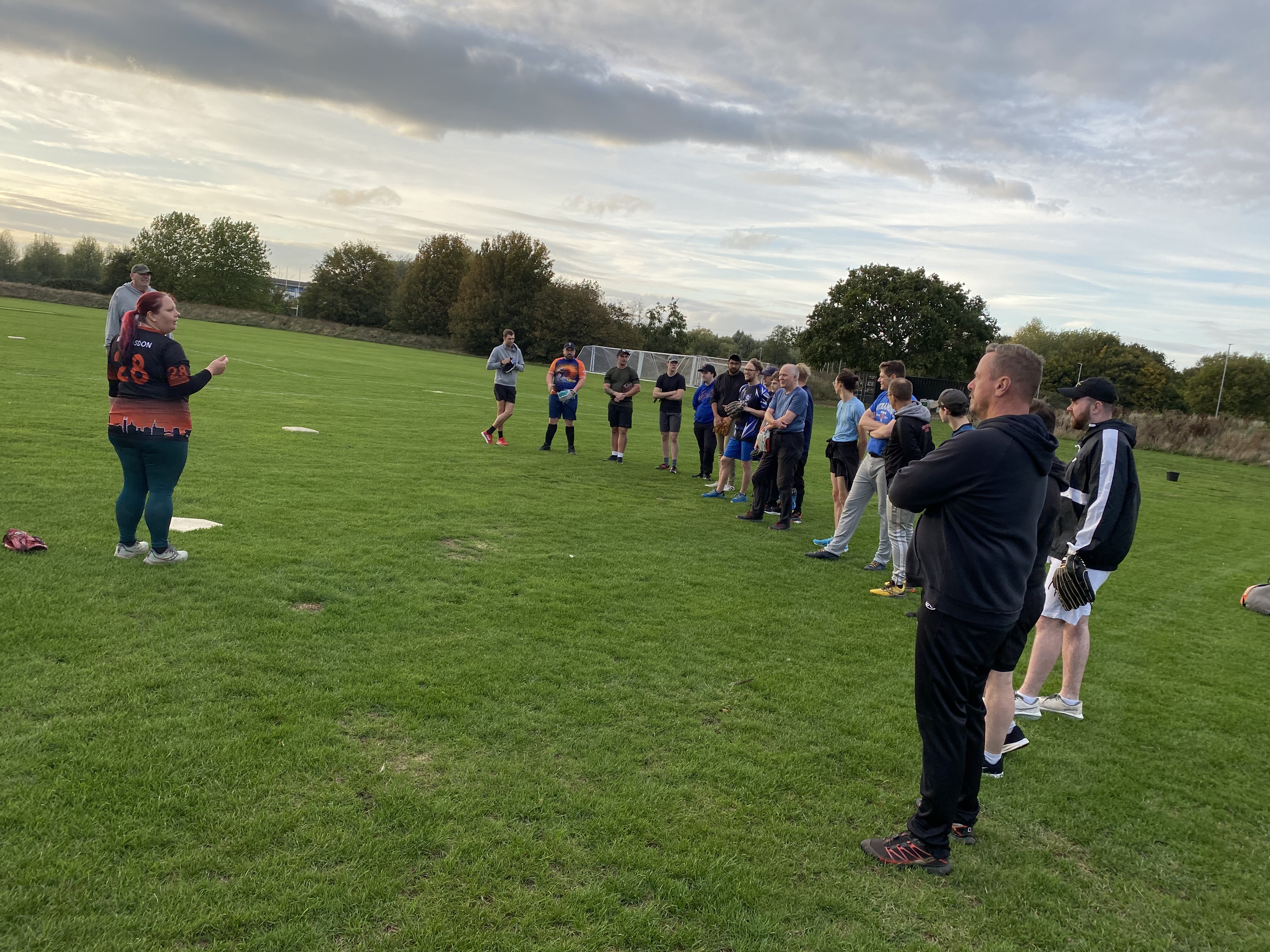
Daniel: It's critical. Games and coaching are the two fundamental things you have to deliver. We can only grow so big with the people we have leading sessions and drills, so we need more coaches, and better coaching, for that product to be good quality.
Fiona: We were kind of pushed into coaching because we needed to, but now we really enjoy it. Getting the qualification has been really worth it for confidence. You feel different once you're qualified.
It's also about spreading the load. If we role-model that we enjoy coaching, others will come on board. The more people who understand the rules and how to coach properly, the better the league gets, and people do win more games when they're coached better.
We think of the league as a triangle. The base is a safe space for new players to learn, and the top is the players who really want to improve. We spent two or three years building a bigger base. Now players are improving and teams are doing much better, so we need higher-grade coaching to serve our top performers. Otherwise we're doing them a disservice as a league.
The three-tier system
Can you talk us through your League’s three-tier player system?
Daniel: Niche sports commonly run into the same problem. The people who are really into it get better and better, and that group becomes more and more inaccessible to anyone else. To build the league, we had to open ourselves up to the bigger market: people who just want something to do or something to try.
So we started to recognise players not by skill level, but by how into softball they are. At one end are absolute beginners just trying it out. In the middle are people who enjoy softball but value the community, their team and the social side just as much. Then there are the committed players who turn up to practice rain or shine and will play even if they lose every game.
We design the league to meet those different expectations, and it runs through everything: our media, the types of practice, the league rules, even how games are umpired. You're a bit easier on the beginners. Ultimately it comes down to what experience people want from the league and what we can give them.
Fiona: Choice is always key, as Daniel always says.
Daniel: If you want to grow your league, choice is the key word: when people can play, how much they pay, how often they play and how committed they are. It's like a shop: you're offering more things. Focus on one market and you'll just reach capacity with it.
People will move up and down, and you have to let them do that at their own speed. If someone only wants to play every now and then, let them. They have permission.
Fiona: All corners of the triangle matter. You need your elite players, your mid-level players with other things going on, and the people who turn up once every few weeks for a chat. They all bring something to the community.
Success stories
What have your big successes been over the last few years?
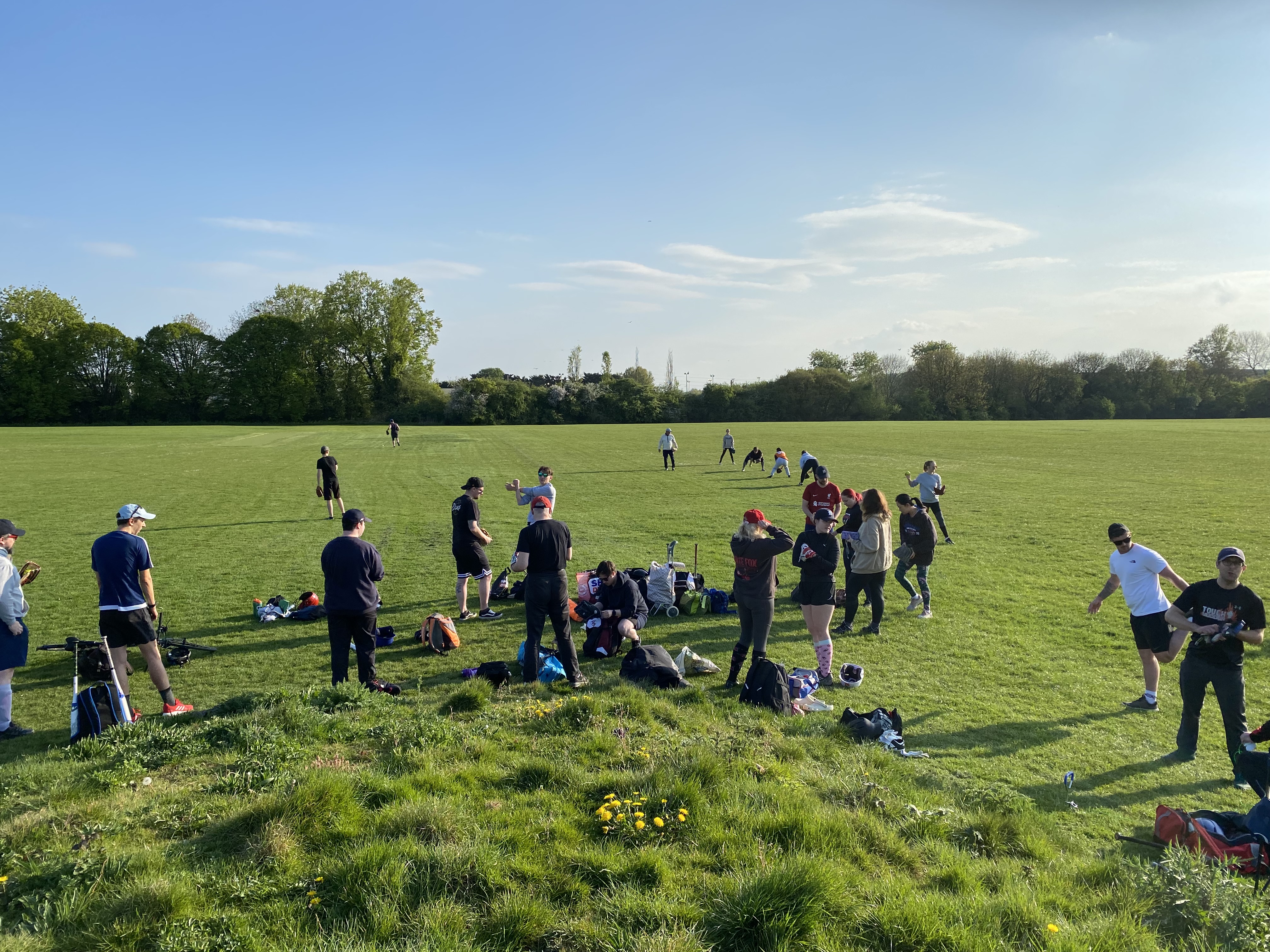
Daniel: The first was creating our development division. It was a gamble. We created four teams from scratch and trusted that beginners would turn up to fill the rosters, with existing players filling in if they didn't. We just pressed go and had faith, and they did turn up. Once people see the teams exist, it gathers momentum.
Fiona: People thought we were mad. "How's the team going to work? There are no players!"
Daniel: People get involved when they feel needed and can see a gap they can fill, whether that's a spot on a team or another job the league needs doing.
About three years later, we started to see the whole system working. Players from those first development teams moved into upper teams and played at a higher level, and the main league started to grow. It was great to be recognised with a BSF Development Award for that.
Hosting a tournament in Swindon has been huge too. We'd wanted one for years, and we've now held it for the last two. Our trophies even feature Zebedee, a nod to Swindon's Magic Roundabout. Behind that is finding a venue that really wants us there and wants to involve the community. Without it we couldn't do what we do.
Advice for other leagues
What advice would you give someone setting up a league, or one of your players moving elsewhere and wanting to replicate your success?
Fiona: Get a few of you together so you can support each other, because doing it alone would feel impossible. Trust the process and keep a growth mindset: the little wins make the big wins. Sessions won't always go to plan and sometimes no one turns up, so don't set your goals so high that you're failing yourself.
Talk to other leagues. When Daniel became chair, just before COVID, I visited the Bristol league to learn how they ran things. Leagues work in different ways. We're largely centralised, with members joining the league directly, while others pull separate clubs together. Decide whether you're growing a league or just putting a team together for tournaments.
If you're starting from absolute scratch, aim to get 12 to 15 players together and a basic set of equipment, and go to some tournaments. One of our members moved to university in Leeds and set up a softball programme there. We helped them work out what equipment she needed and how to spend a grant on it. Ask BaseballSoftballUK and the other softball leagues and ask for advice. The softball community is really welcoming, and if people don't know the answer, they'll pass you to someone who does.
Daniel: First, always try things. Don't avoid something because you're scared it will fail. Trying means you learn, and we've made loads of mistakes and adjust all the time. If you don't try, you're stuck.
Second, know what your members want, and shape what you offer around that rather than forcing something on them. Worse still is putting groups who want different things together, so everything is in conflict.
Fiona: Build a committee with different skill sets. It's okay to challenge each other's opinions, because one person alone can be narrow-minded. Find the middle ground, and have someone who can step back and see the bigger picture. That's what Daniel brings to us as Chair.
Daniel: There's always a tension between what I want for the bigger picture and what the captains want for their teams, but that tension is beneficial. If it all went one way, it wouldn't work.
Spreading the word
How do you get the word out to the local community?
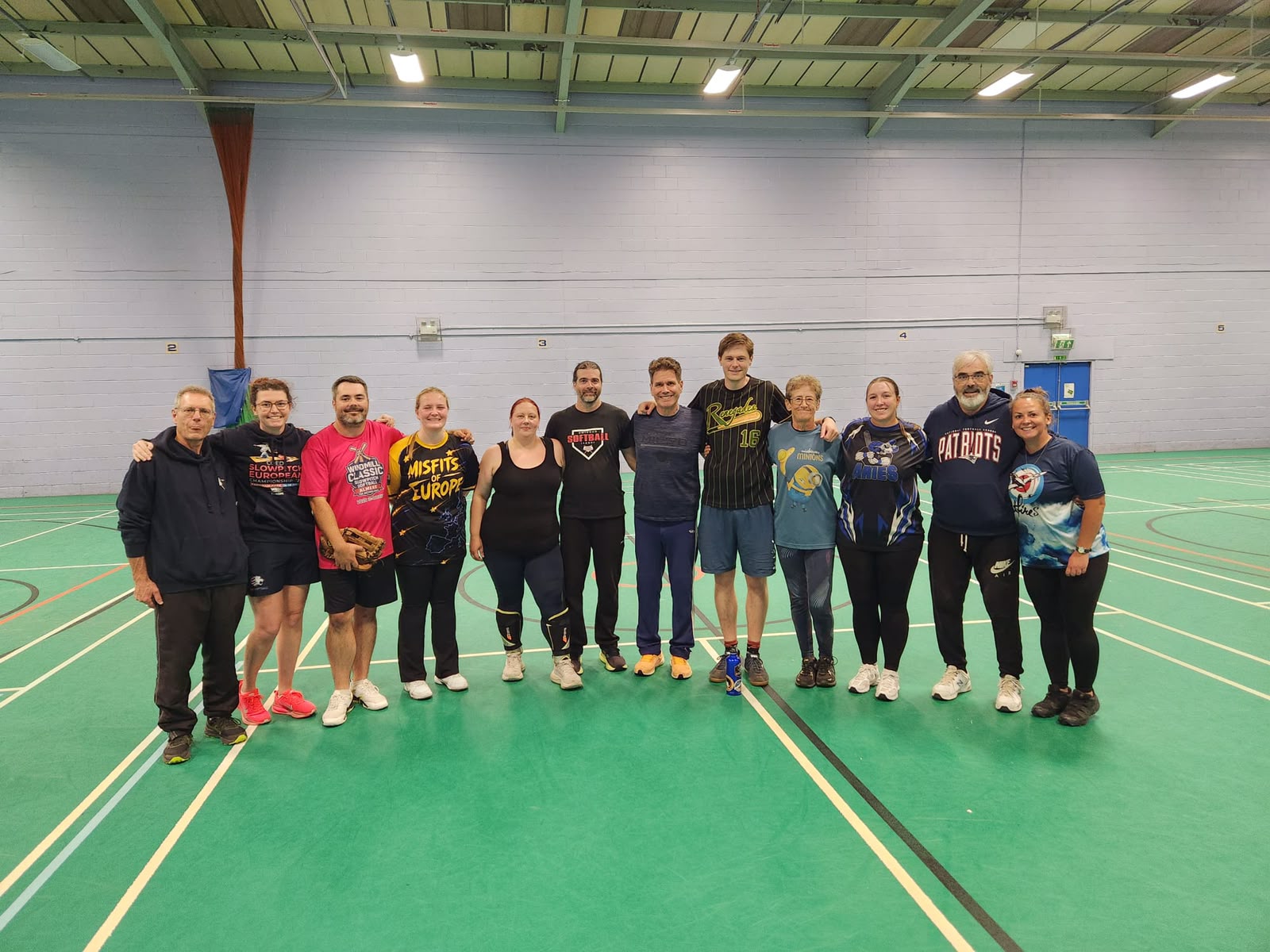
Daniel: Lots of social media. It's a lot of work to make it effective; you need someone posting every other day in the run-up to the season. Keeping the website active for search engines takes work too, because people have to write for it.
This comes back to why the facility matters. We're based at a sports hub run by the parish council, which wants diverse communities engaged in sport there. Playing somewhere public rather than hidden away, at a venue that wants to promote you, is so valuable when your resources are tight.
Fiona: Half the problem is that many people don't yet understand what softball is. Our social media team has grown, and that helps. Social media has been our most successful method so far.
Daniel: Getting the right person or organisation engaged often does half the work for you. We do some work with the Scouts, who are always happy for us to run a session. Try all sorts of things, but don't stick with advertising that isn't working, because it takes a lot of resources.
Fiona: And don't underestimate word of mouth. As long as you're delivering good products and people are enjoying it, they'll talk about it, and you'll get players that way.
The next 12 months
If we spoke again in 12 months, what would you like the big successes to be?
Fiona: Another championship team!
Daniel: We're continuing to work on how players progress from our development teams to the upper teams. We want a middle grade where people can build confidence before moving up, or simply stay there. That relies on numbers, though. Swindon isn't a university town, and people don't move in like they used to, so we work hard just to maintain numbers. We grow at a steady rate rather than quickly.
Fiona: Another championship team would really help, as we now split the championship into two divisions. The top teams have a lot of National Softball League players, so going straight up from development can look daunting. A mid-tier gives players a smaller step while still giving them exposure to the top.
Next year we also want to focus on younger players. Our league is open from age 14, and now that we have qualified coaches, we'd like to run separate training sessions for 14 to 18-year-olds. Joining an adult league is a lot for under-18s, so it's about giving them an extra safe space. If that gets going, we hope to take it into local schools.
Anything else you'd like to add?
Fiona: We're looking forward to our end-of-season awards night. We had about 40 people last year and we're expecting 80 this year, so it should be our biggest yet. It's been a really positive season.
And it's not just us. We've got a strong team of 10 to 15 active organisers in the background, and they shouldn't be overlooked.